Discovery
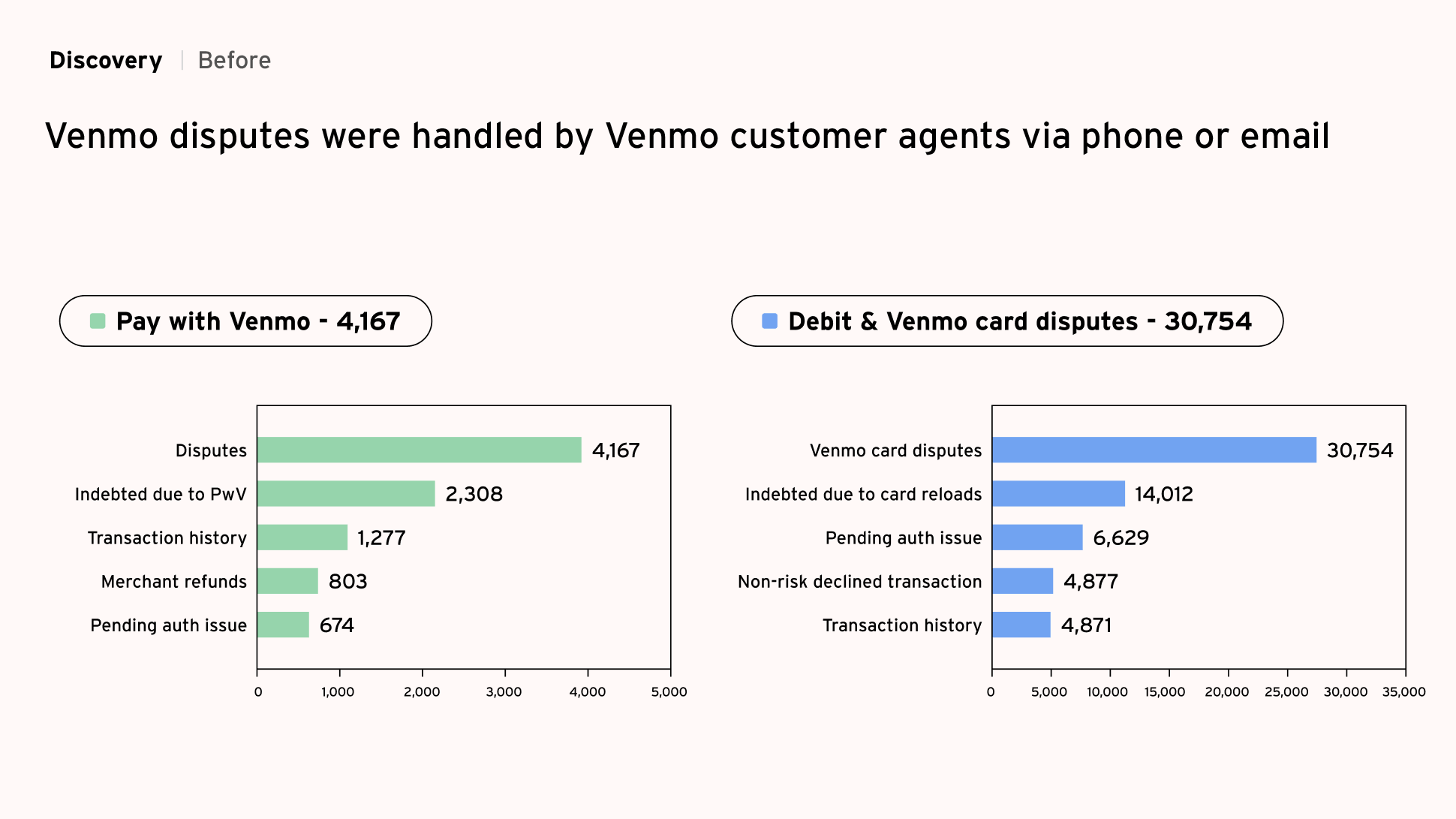
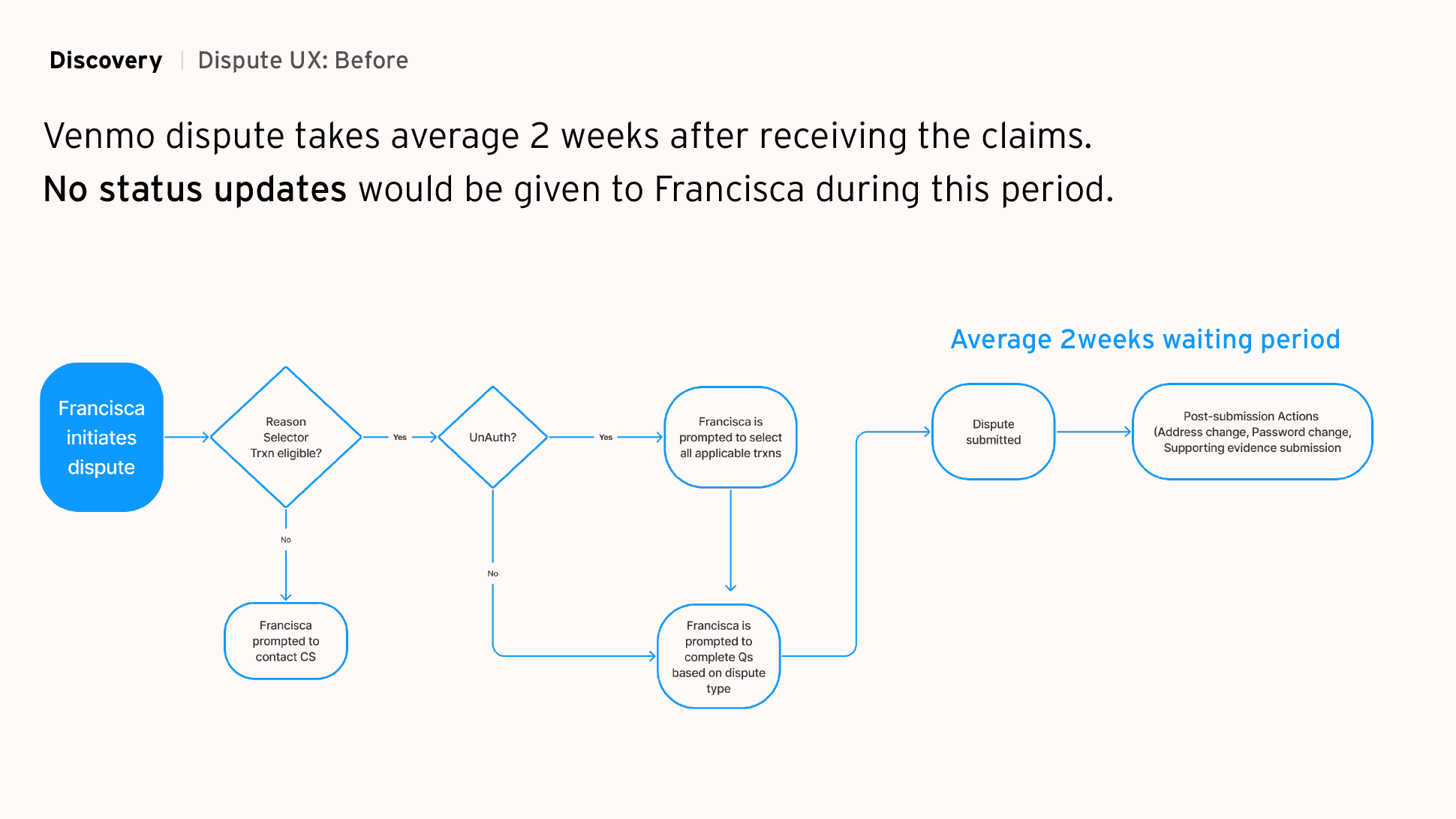
UX audit on the existing design
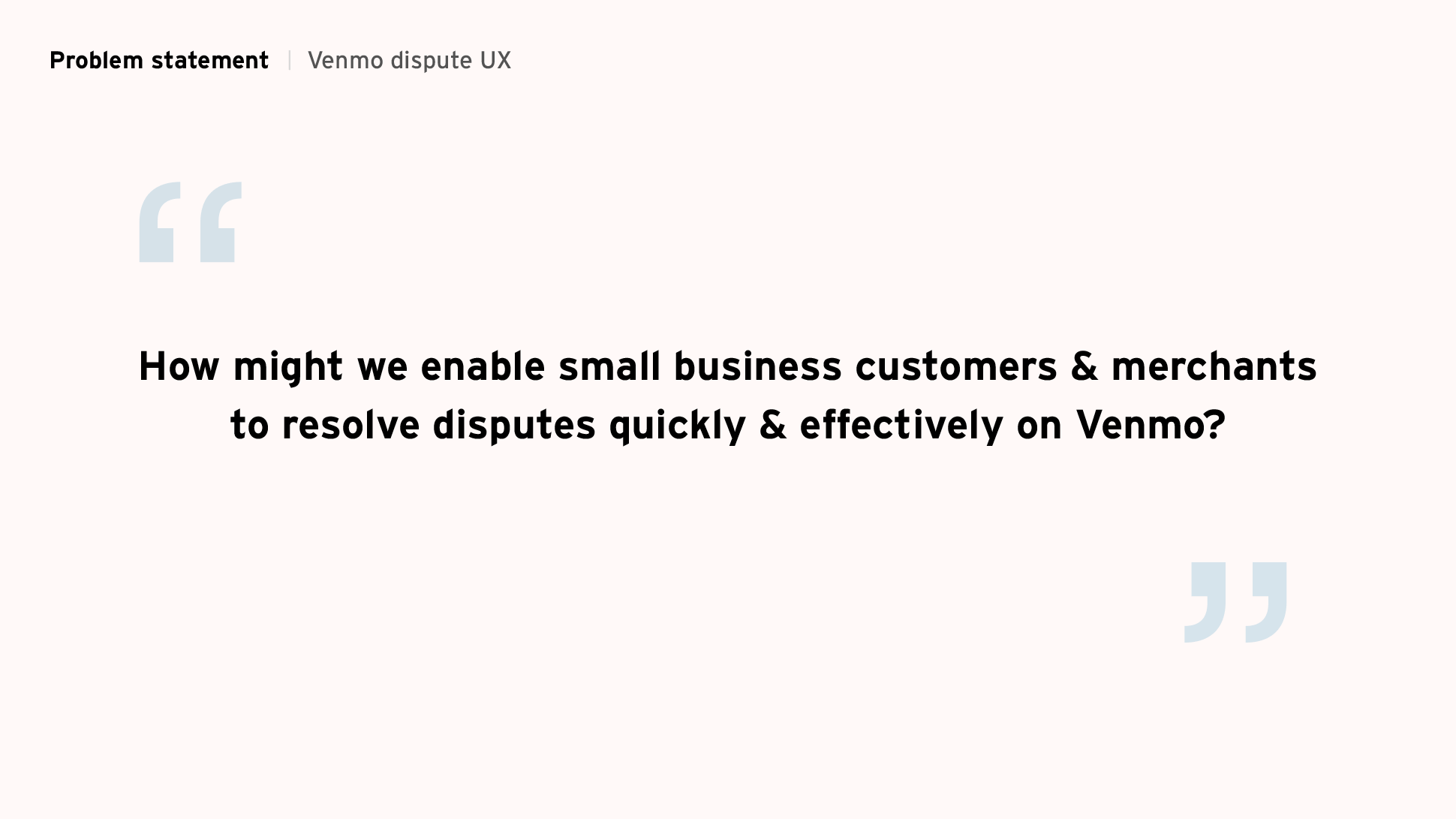
Closer look on the existing work to identify painpoints and opportunities
Why this section matters
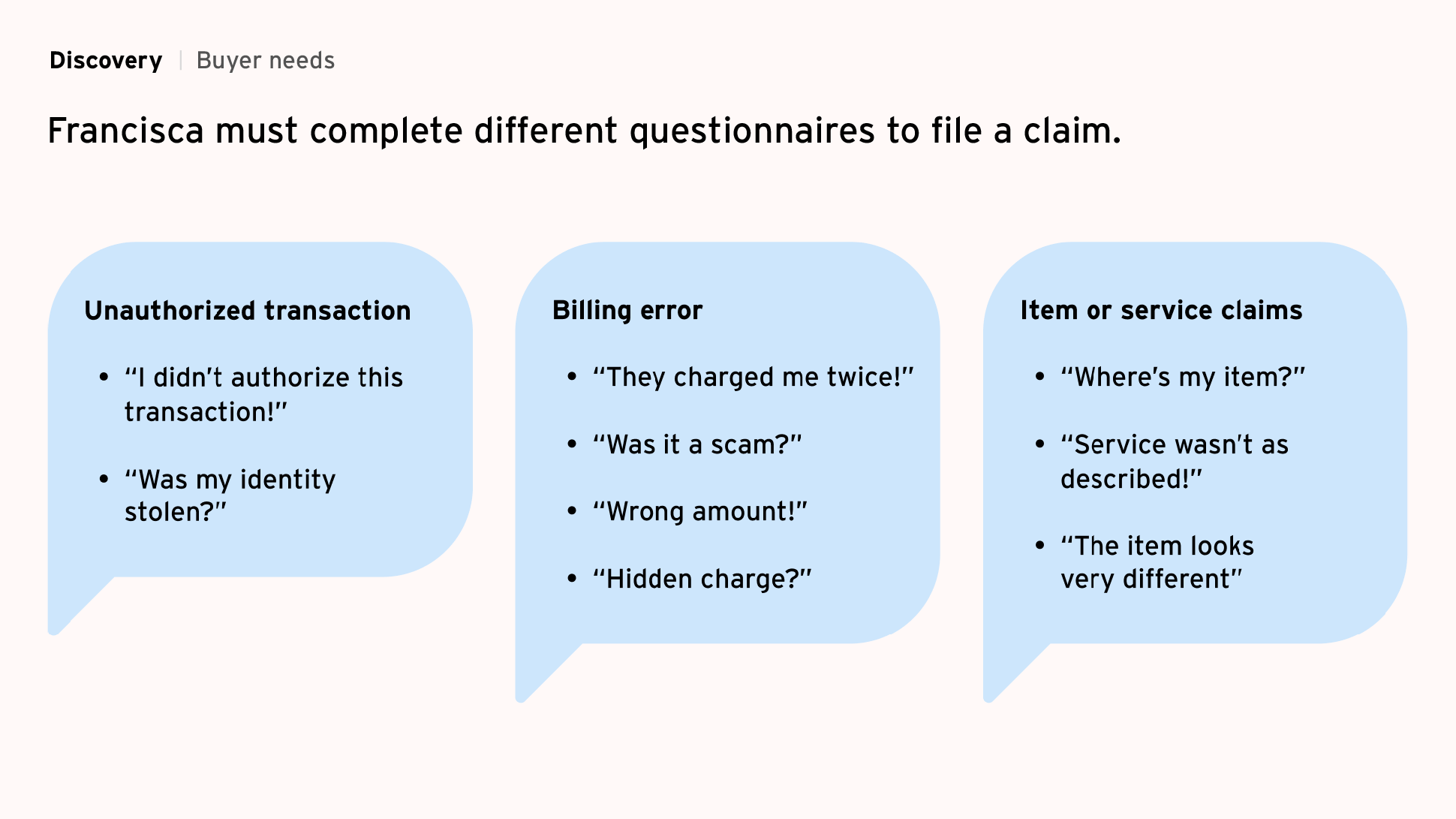
I first audited the existing experience to understand where customers were losing clarity, where support dependency was highest, and what needed to change in order to make disputes feel more manageable inside the product.
What changed in the redesigned direction
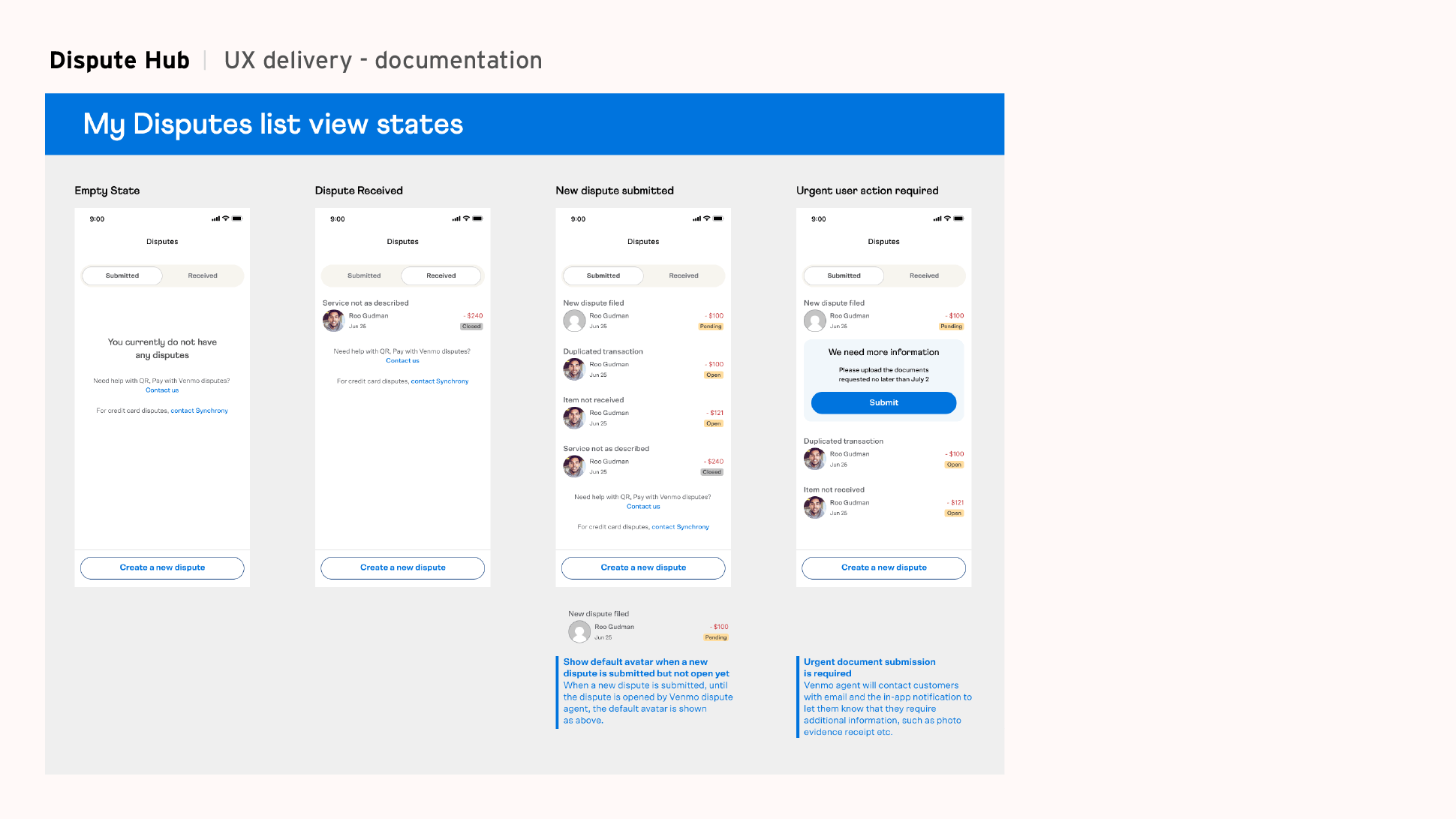
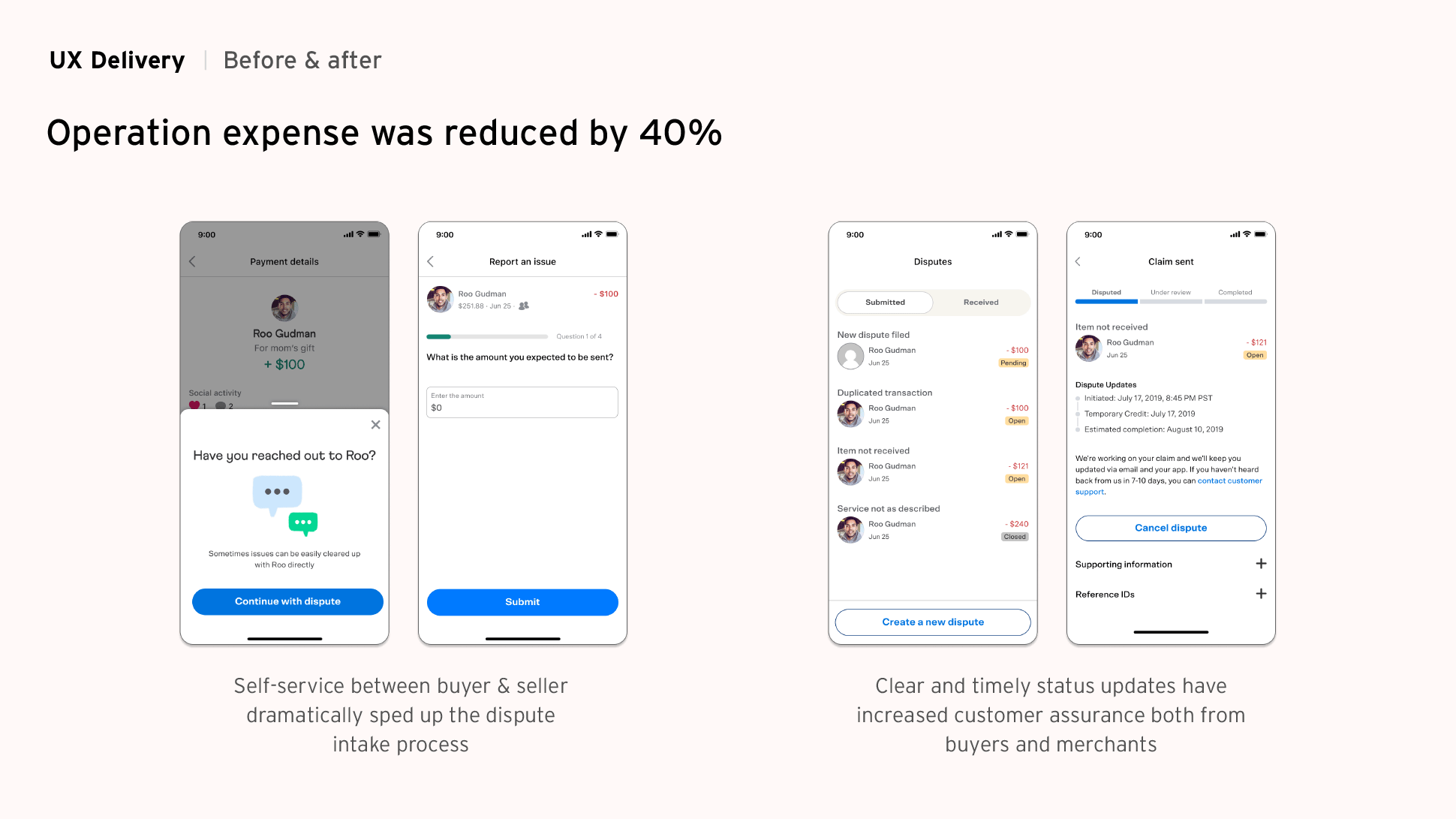
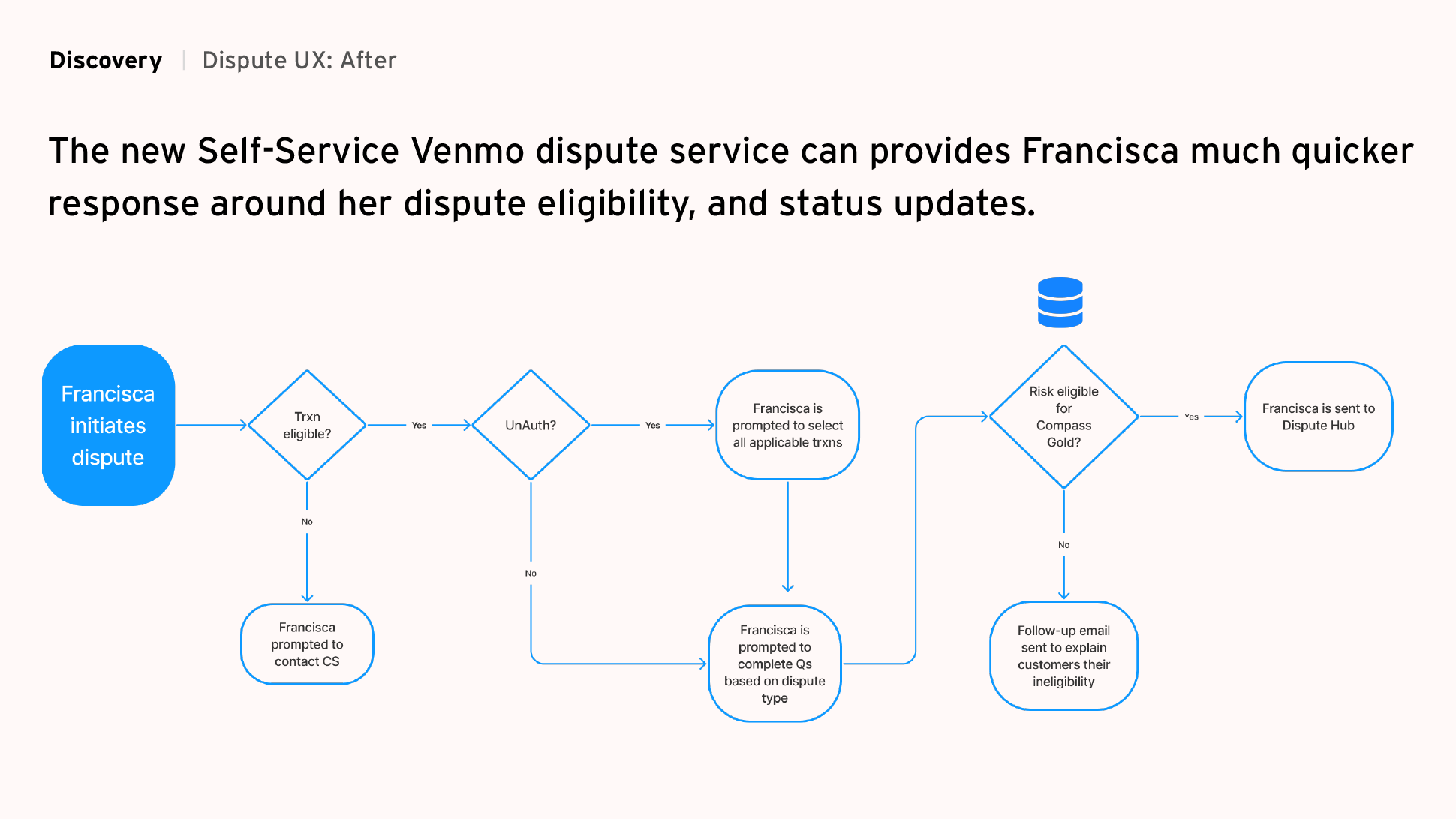
The experience was restructured into a step by step flow that is easier to understand and reduces reliance on manual support.
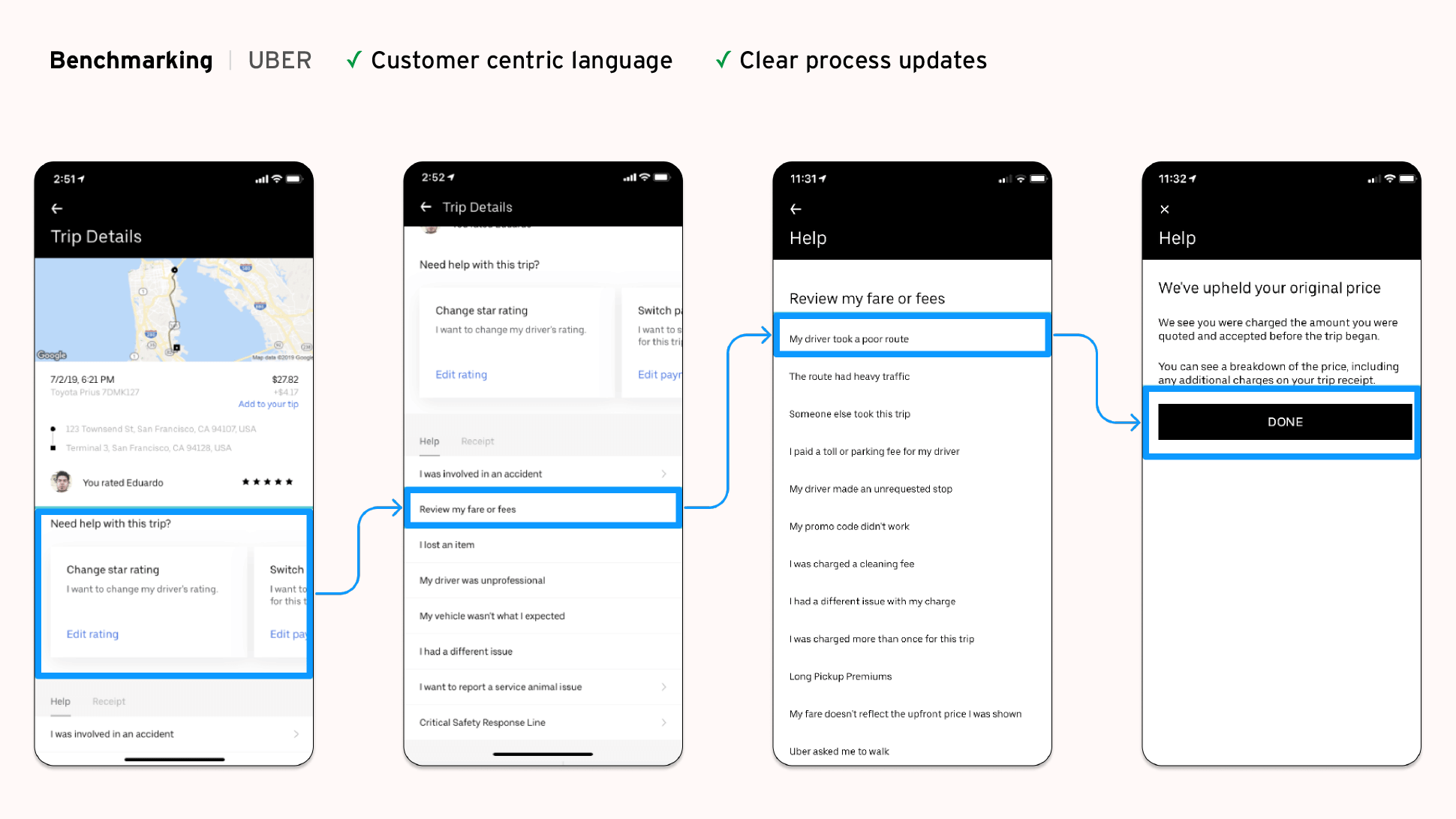
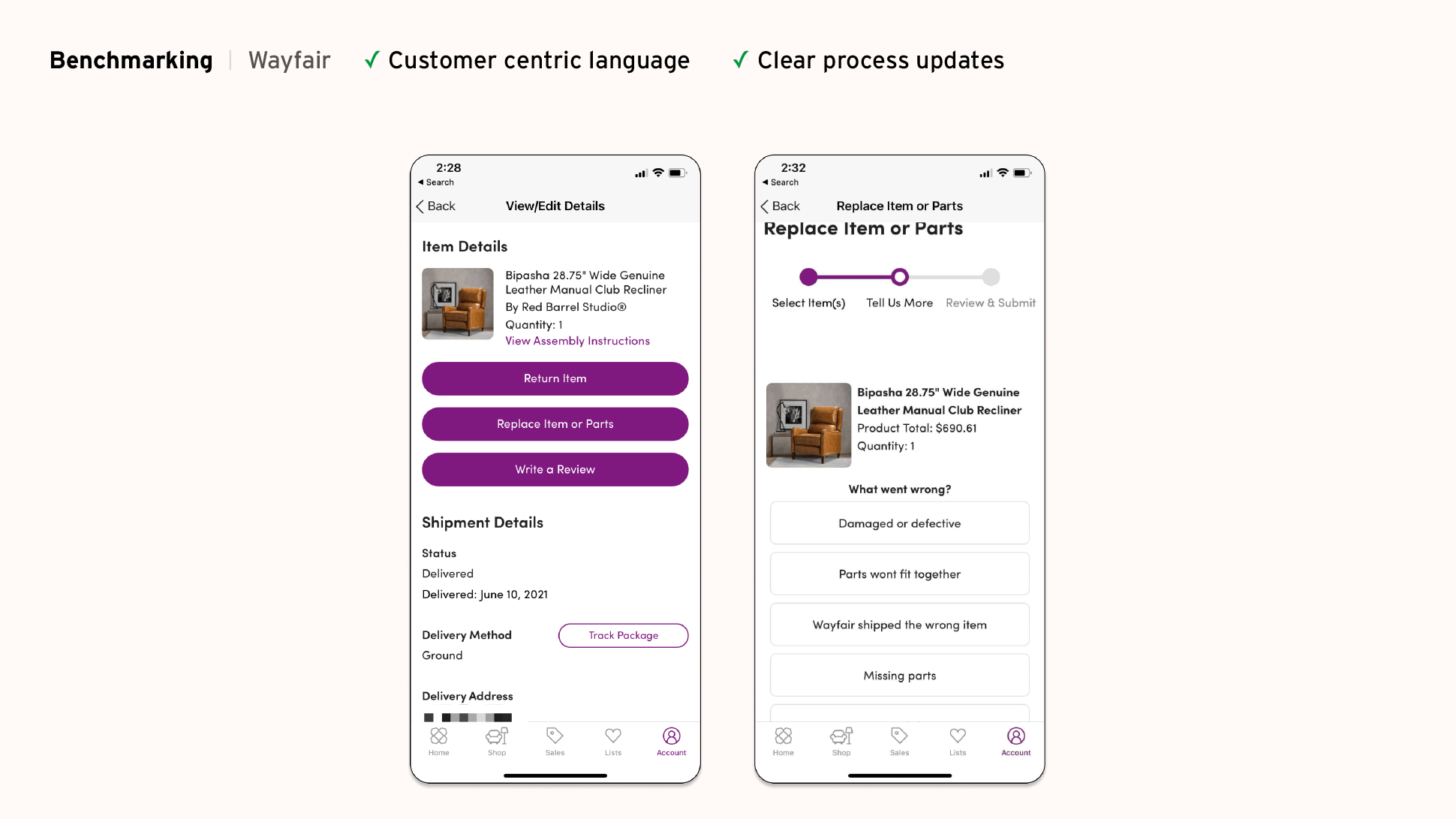
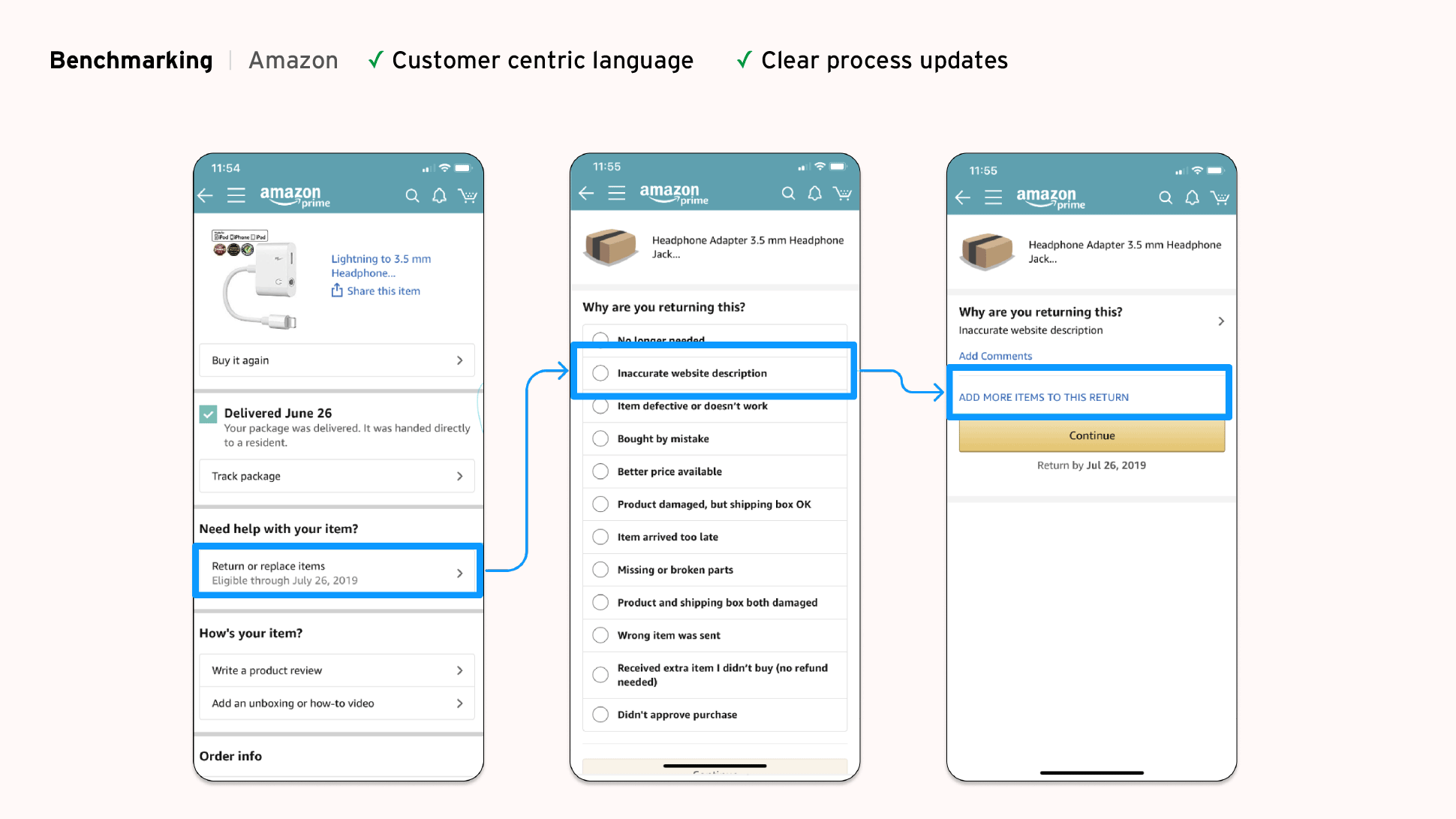
Competitive inspiration
I also looked at adjacent dispute and support patterns to see how other services handled claims, reassurance, and escalation. This helped identify what Venmo could borrow without overcomplicating the flow.
Early concept exploration
With the main friction points identified, I explored several ways to simplify the entry point, structure the flow, and introduce support patterns like chatbot assistance without overwhelming the user.
Refining the interaction model
This round focused on how the experience should behave in practice — what needed to be shown, when reassurance mattered most, and how much support could be handled inside the product itself.
Converging on a direction
By this point the work was narrowing toward a more productized dispute journey — one that reduced manual dependency while keeping the experience understandable and trustworthy.
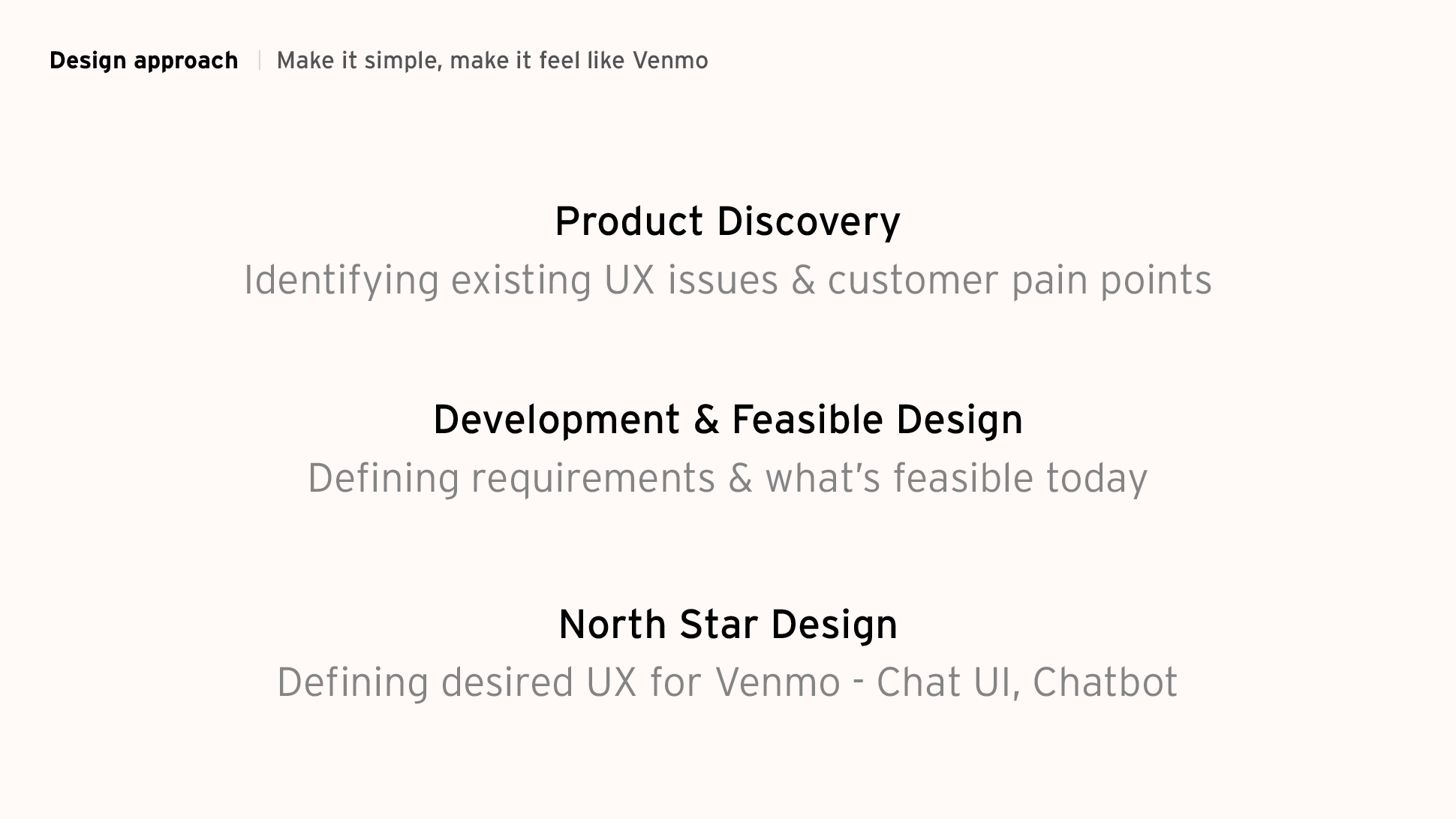
Strategy
Strategy and best-practice review
After exploring the problem space, I mapped what strong dispute experiences had in common. That helped define the patterns Venmo should lean into: clearer structure, progressive guidance, and reduced reliance on manual support.
Structural decision-making
This work helped clarify how the dispute journey should be organized. The emphasis was on making the path more predictable and easier to follow, rather than leaving users to figure out the process on their own.
Experience refinement
From here, the concepts were shaped into a more complete direction. The aim was to create a dispute flow that felt clearer, more supportive, and more scalable for the business.
Solution
Validation setup
Once the direction was defined, the next step was to test whether the proposed experience actually felt understandable and trustworthy enough to reduce support reliance.
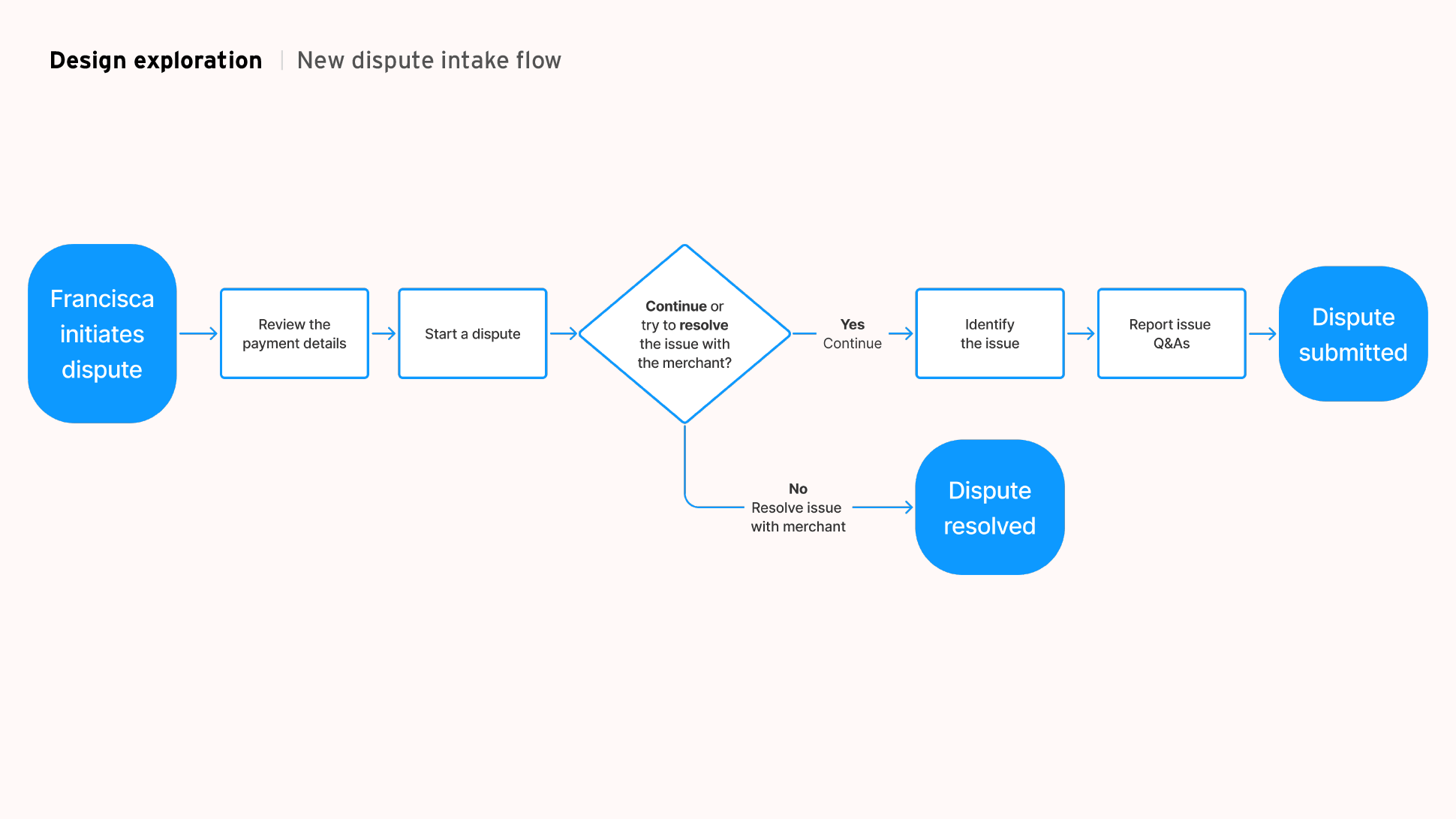
What validation started to show
These slides capture how the concepts were received and where further refinement was needed. The focus was on clarity, confidence, and whether self-service felt viable from a customer perspective.
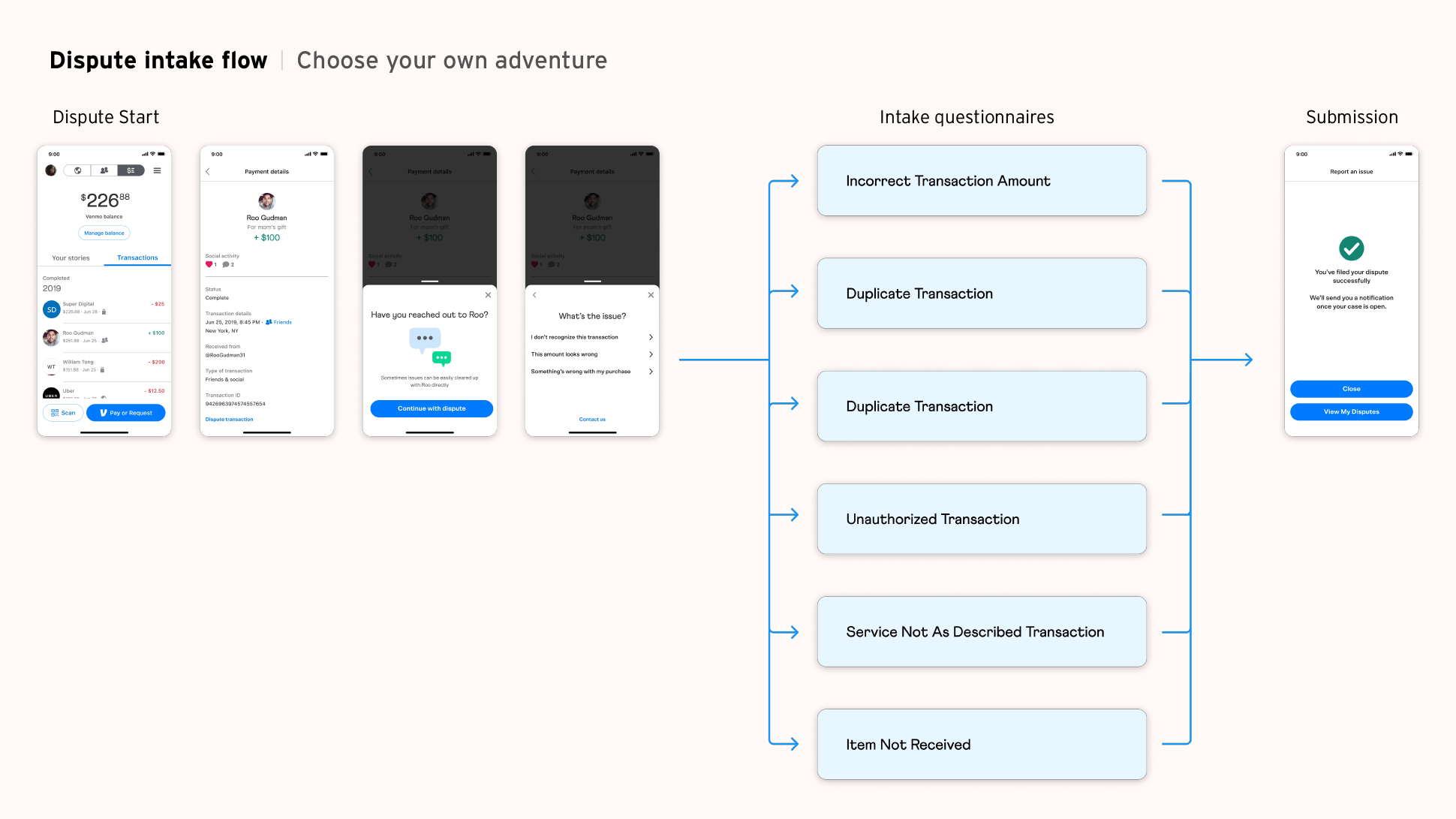
Refining based on feedback
The concepts continued to evolve as feedback clarified what users needed in order to feel supported without defaulting to an agent-assisted channel.
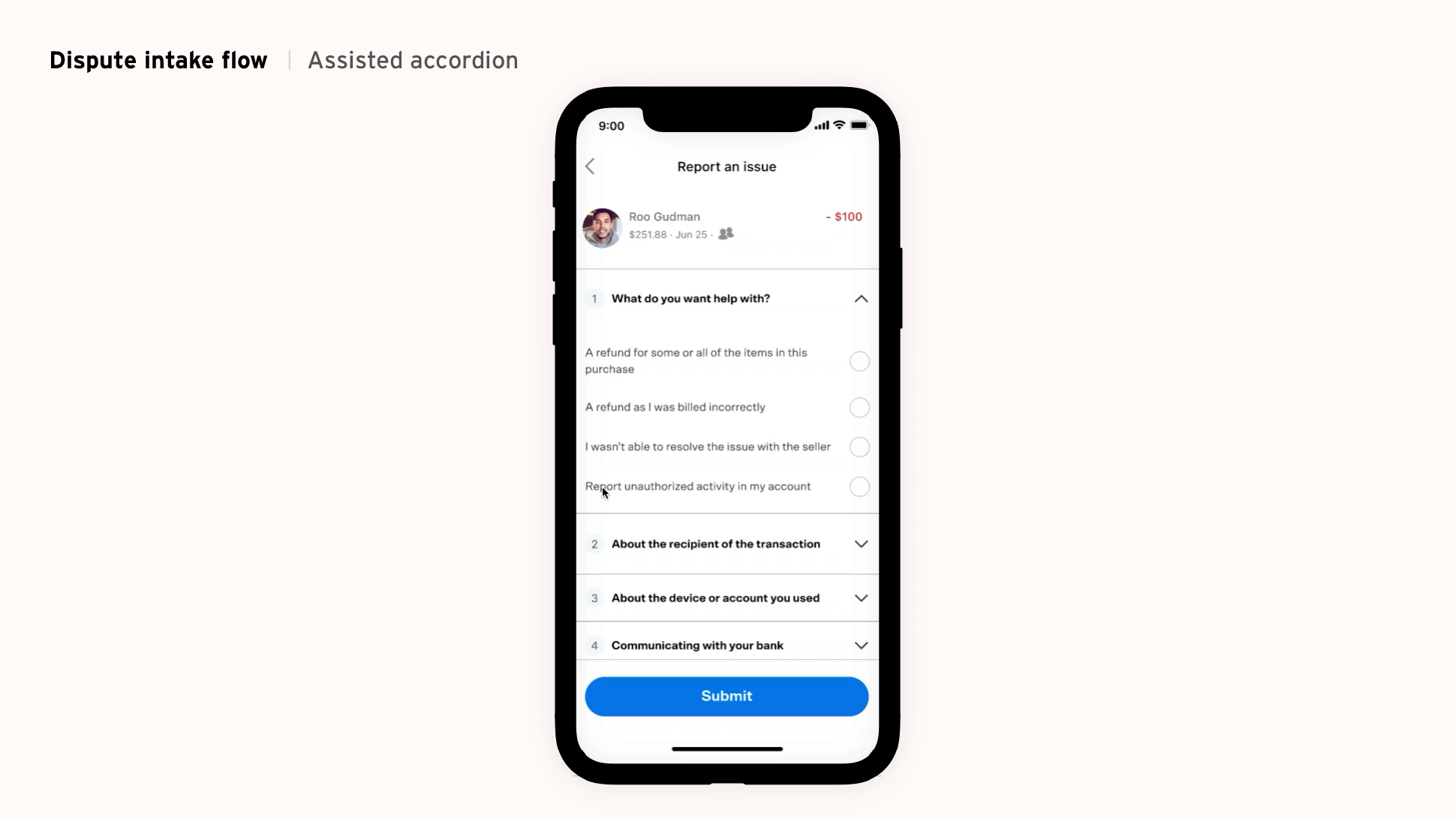
Stress-testing the flow
This stage helped confirm whether the experience was becoming more understandable in practice, not just stronger on paper.
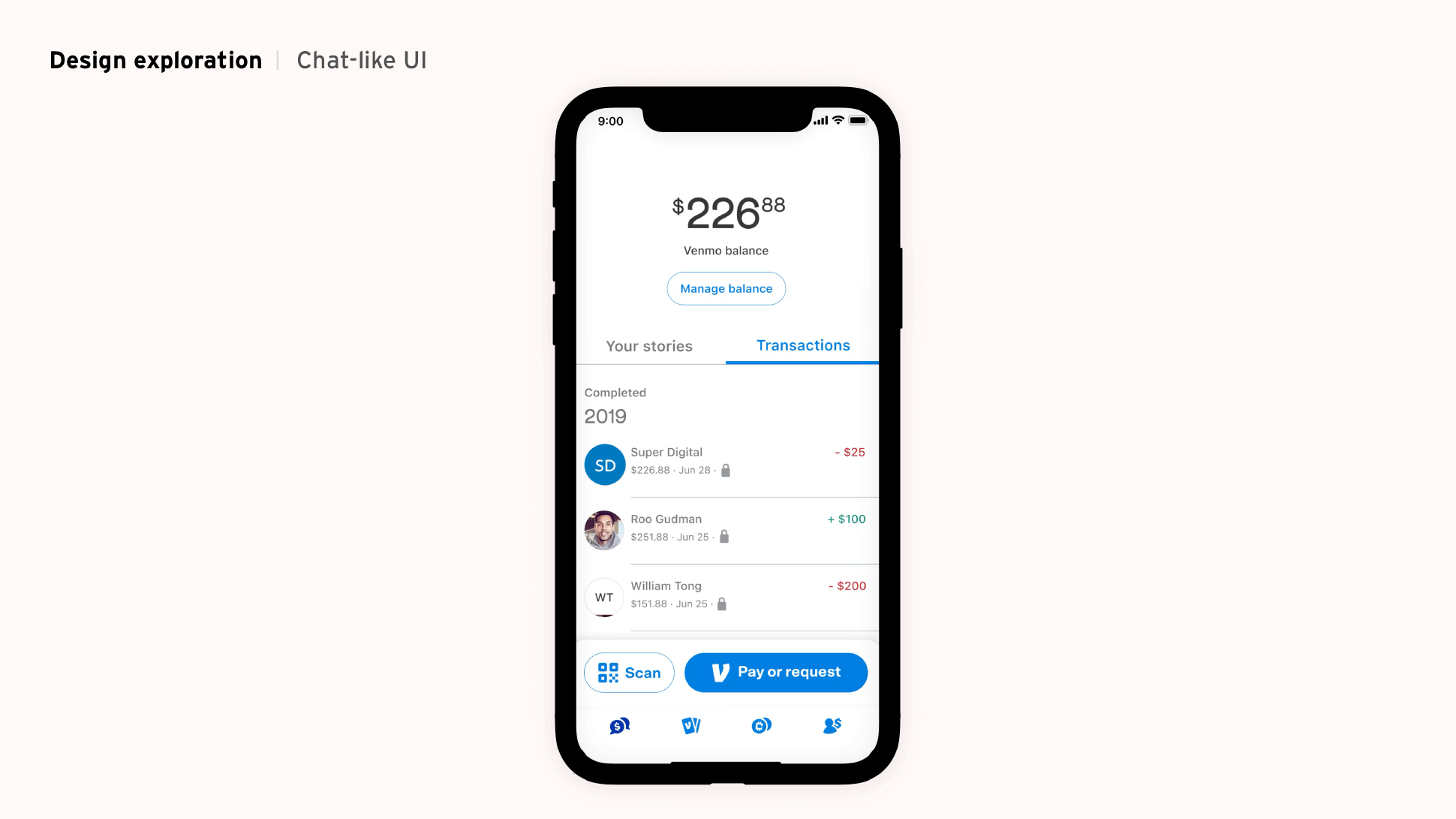
Final direction & impact
The final concept moved Venmo closer to a scalable, self-service dispute model. It combined clearer structure, stronger expectation-setting, and lighter support patterns that helped reduce dispute calls by 40%.
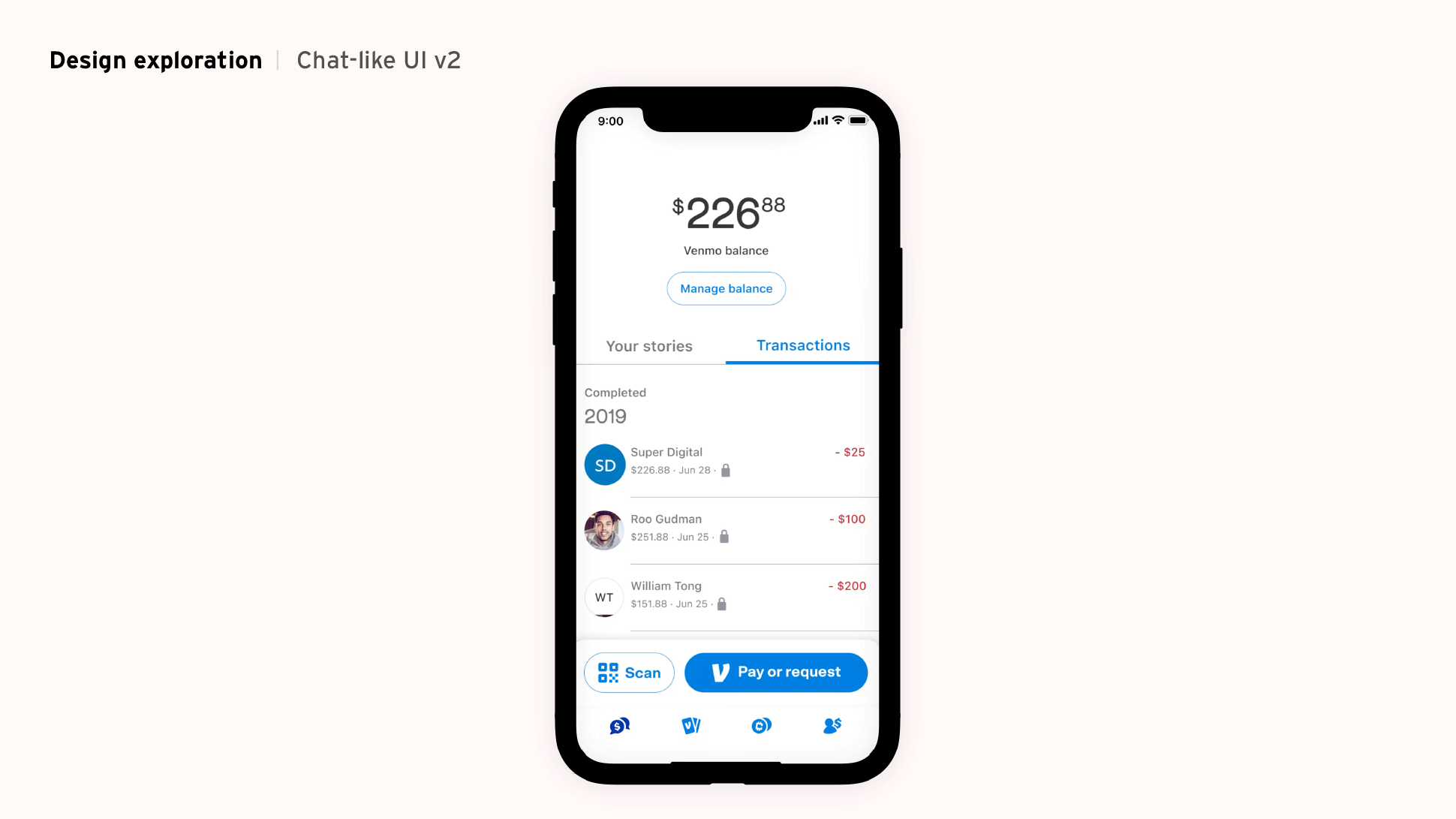
What the solution accomplished
This work shows how a service-heavy operational problem can be turned into a more scalable product experience without losing the reassurance customers need during a dispute.
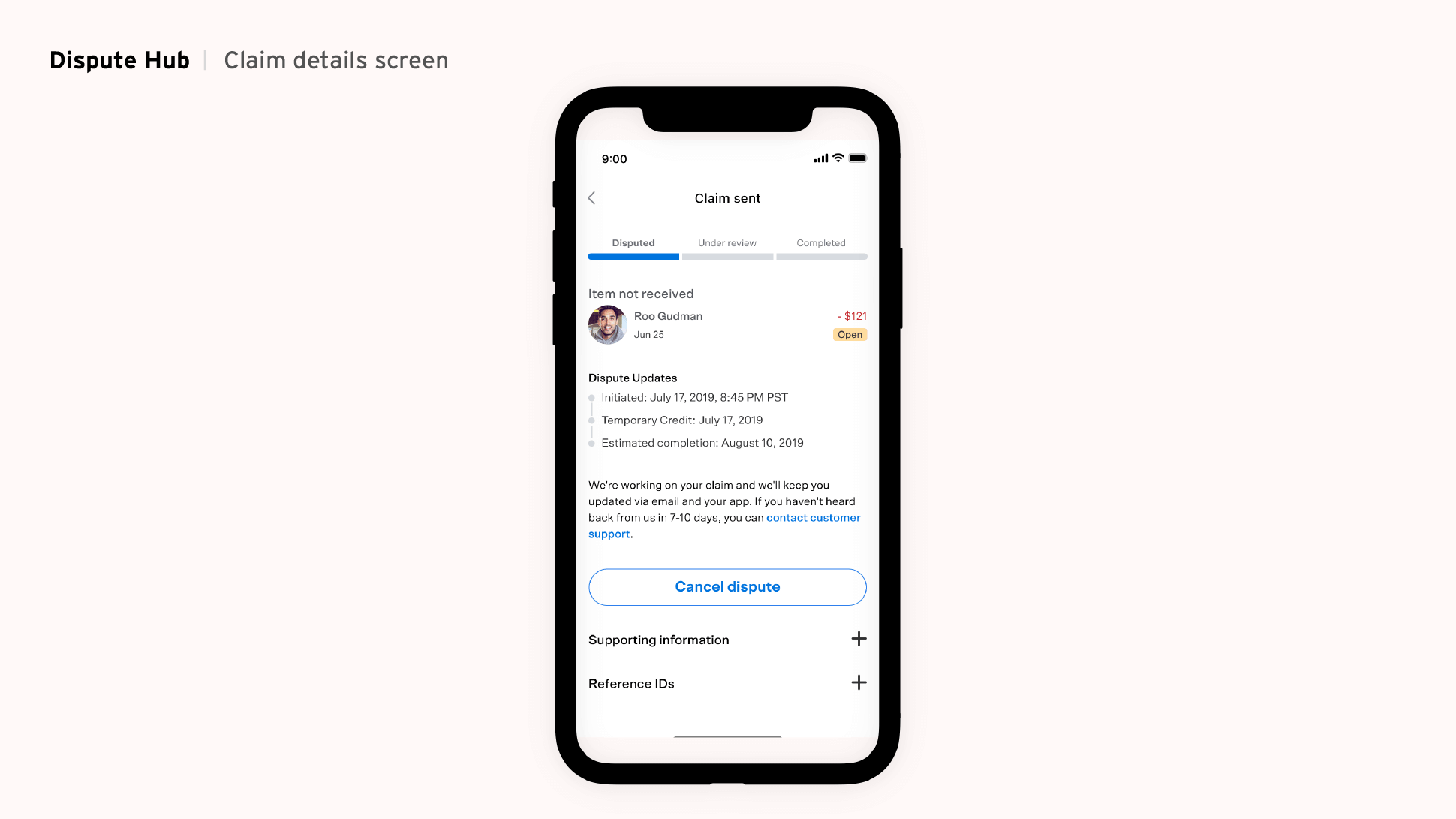
Productizing support
Instead of treating disputes purely as a customer service issue, the redesign approached them as a product experience that could better guide, reassure, and scale.
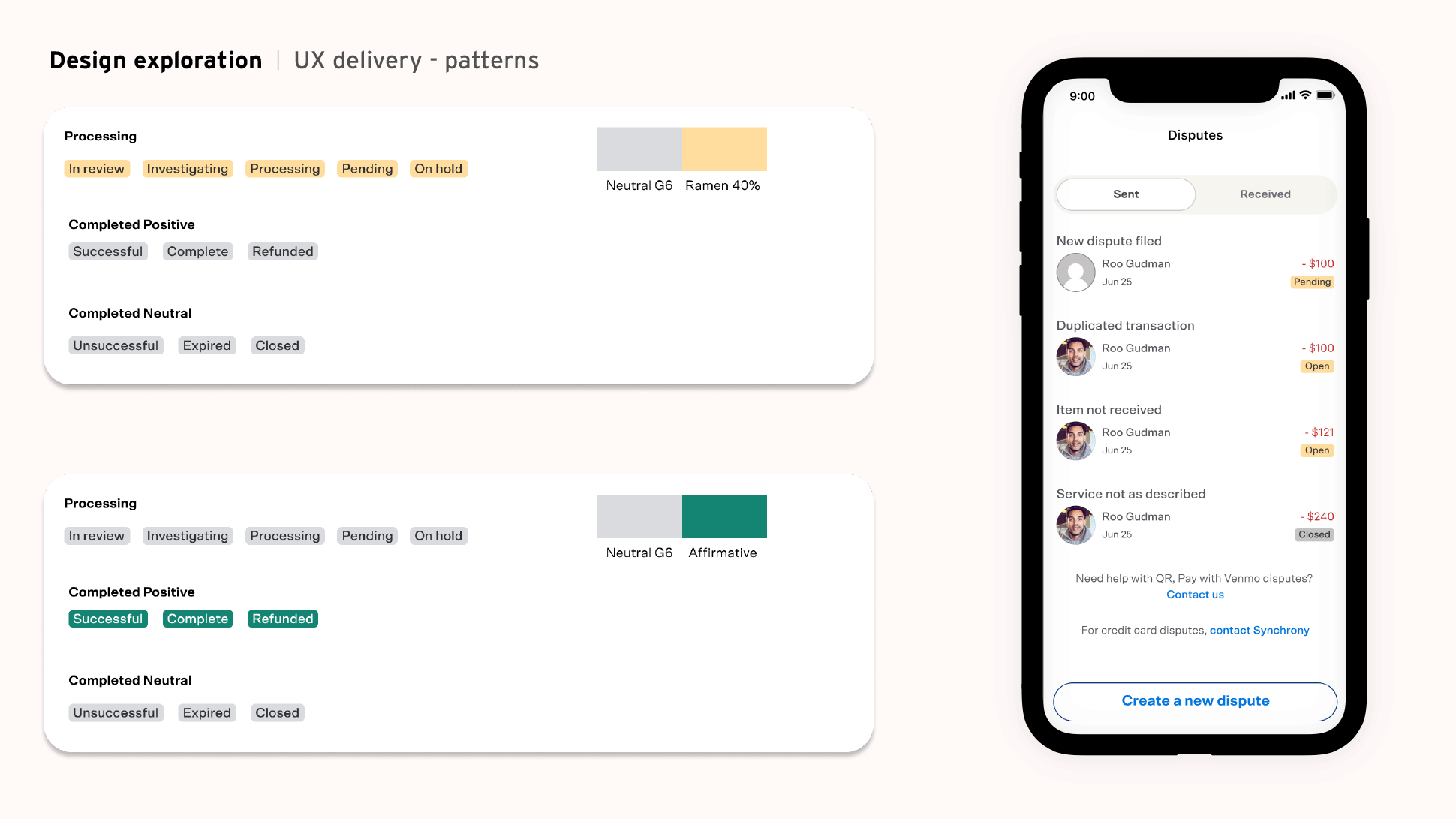
Operational impact
The redesign helped absorb growing dispute volume more effectively by shifting appropriate cases into a guided self-service path.
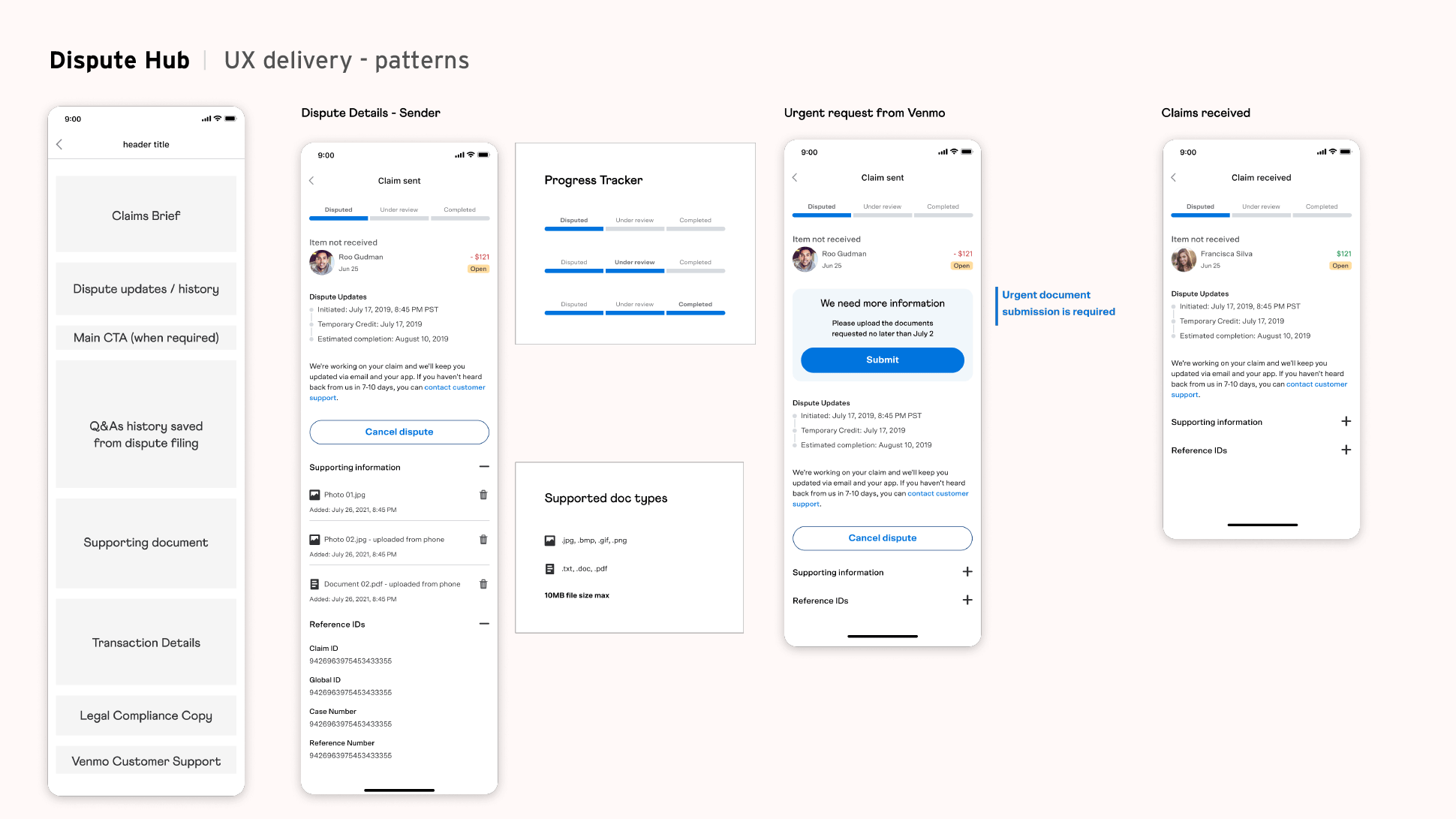
Closing takeaway
This project demonstrates how UX can simplify a complex operational workflow, improve customer confidence, and create measurable support impact at the same time.